
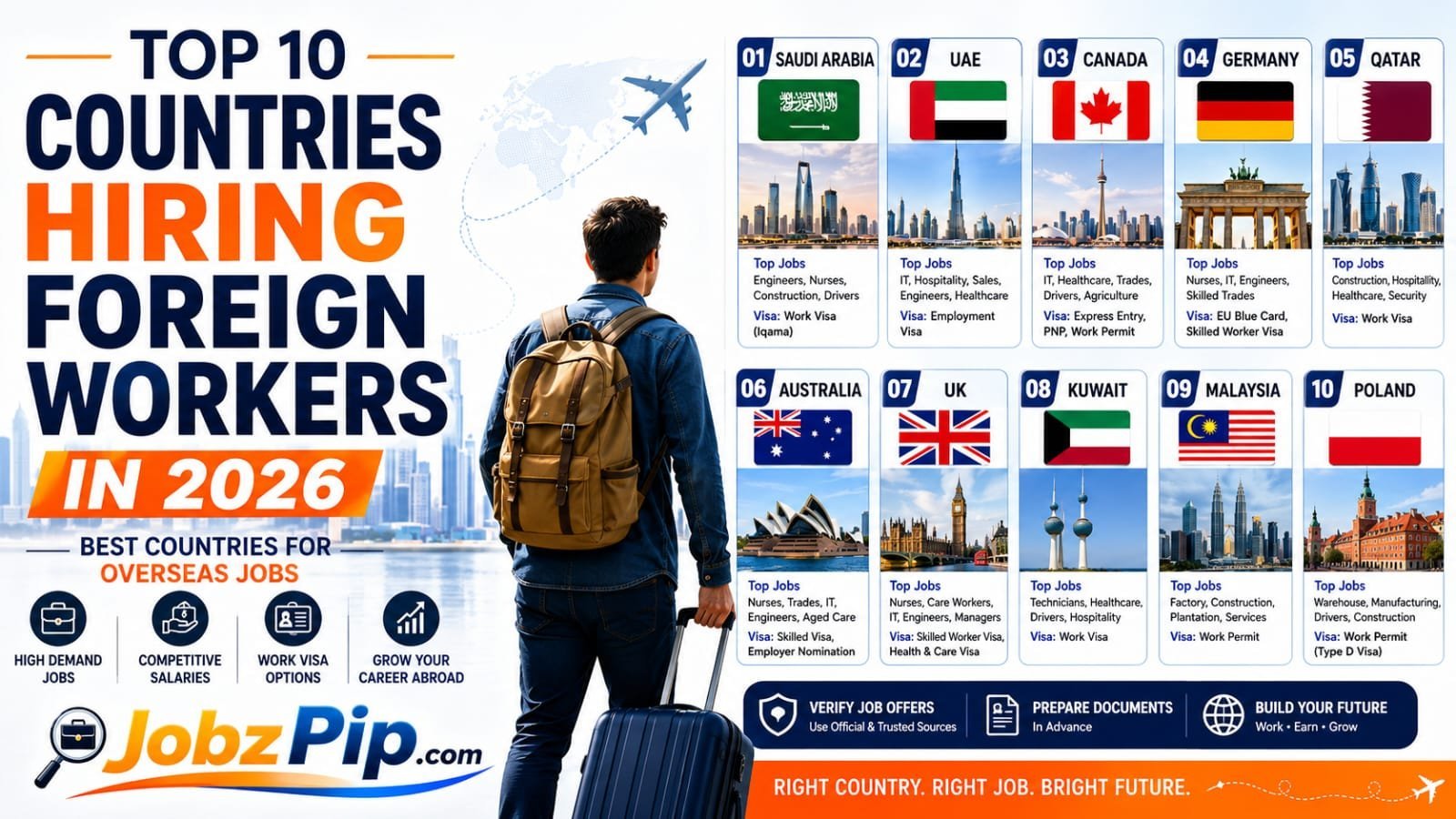
Every year, the map of global labor demand shifts a little. Some countries tighten their immigration policies, while others open new doors to attract talent and fill critical labor shortages. If you’re planning your next career move abroad, knowing which countries are actively hiring foreign workers right now can save you months of wasted effort applying in the wrong places. Here’s a detailed, practical breakdown of the top destinations for overseas job seekers in 2026.
1. Saudi Arabia
Saudi Arabia continues to be one of the largest employers of foreign labor in the world, driven largely by Vision 2030 mega-projects like NEOM and massive infrastructure development. Construction workers, engineers, healthcare professionals, hospitality staff, and skilled tradespeople are in constant demand. The country offers tax-free salaries, which remains one of its biggest attractions for foreign workers, especially from South Asia, the Philippines, and parts of Africa.
In-demand roles: Civil engineers, electricians, welders, nurses, hotel staff, drivers
Typical visa route: Employer-sponsored work visa (Iqama system)
2. United Arab Emirates
The UAE, particularly Dubai and Abu Dhabi, remains a magnet for global talent across almost every sector, from finance and technology to hospitality and logistics. The country’s business-friendly environment and tax-free income continue to draw professionals worldwide. Free zones also allow for more flexible employment and business setup options for skilled expatriates.
In-demand roles: IT professionals, sales and marketing staff, hospitality workers, engineers, healthcare staff
Typical visa route: Employment visa sponsored by employer or free zone authority
3. Canada
Canada has built one of the most structured and transparent immigration systems in the world, making it a top choice for people who want a genuine pathway to permanent residency, not just a temporary job. Programs like Express Entry, the Provincial Nominee Program, and the Agri-Food Pilot are specifically designed to bring in skilled and semi-skilled workers to address labor shortages across the country.
In-demand roles: Truck drivers, healthcare workers, tradespeople, IT specialists, agricultural workers
Typical visa route: Express Entry, Provincial Nominee Programs, Labour Market Impact Assessment (LMIA)-based work permits
4. Germany
Germany’s aging population and strong industrial base have created a serious shortage of skilled workers, particularly in engineering, IT, healthcare, and skilled trades. The country has actively simplified its immigration laws through the Skilled Immigration Act, making it significantly easier for qualified non-EU workers to move there for employment.
In-demand roles: Nurses, IT specialists, mechanical and electrical engineers, skilled tradespeople
Typical visa route: EU Blue Card, Skilled Worker Visa
5. Qatar
Since hosting major global events, Qatar has continued to invest heavily in infrastructure, tourism, and services, keeping demand high for foreign labor across multiple sectors. The country offers competitive tax-free salaries and has been steadily improving labor regulations for foreign workers in recent years.
In-demand roles: Construction workers, hospitality staff, security personnel, healthcare workers
Typical visa route: Employer-sponsored work visa
6. Australia
Australia’s points-based skilled migration system continues to attract professionals from around the world, particularly in healthcare, engineering, IT, and trades. Regional visa programs also offer additional pathways for those willing to work outside the major cities, often with faster processing times and additional incentives.
In-demand roles: Registered nurses, carpenters, electricians, software developers, aged care workers
Typical visa route: Skilled Independent Visa (subclass 189), Skilled Nominated Visa (subclass 190), Employer Nomination Scheme
7. United Kingdom
The UK’s Health and Care Worker visa and Skilled Worker visa routes have created significant opportunities, especially for healthcare professionals and workers in shortage occupations. The National Health Service alone continues to recruit thousands of nurses and care workers from overseas every year.
In-demand roles: Nurses, care workers, IT professionals, engineers, hospitality managers
Typical visa route: Skilled Worker Visa, Health and Care Worker Visa
8. Kuwait
Kuwait’s economy relies heavily on foreign labor across construction, oil and gas, retail, and domestic services. While regulations have tightened in some sectors in recent years, demand remains steady for skilled and semi-skilled workers, particularly in technical and healthcare fields.
In-demand roles: Technicians, healthcare staff, drivers, hospitality workers
Typical visa route: Employer-sponsored work visa
9. Malaysia
Malaysia has emerged as an increasingly popular destination, particularly for workers from Bangladesh, Nepal, and Indonesia, thanks to its relatively lower cost of relocation and growing manufacturing and plantation sectors. The country has also been developing clearer government-to-government labor agreements to regulate recruitment and protect workers’ rights.
In-demand roles: Factory workers, plantation workers, construction laborers, service staff
Typical visa route: Employer-sponsored work permit under government labor agreements
10. Poland
Poland has quietly become one of Europe’s fastest-growing destinations for foreign labor, driven by a strong manufacturing sector and a shrinking domestic workforce. It also serves as a stepping stone for many workers looking to eventually move deeper into the EU labor market.
In-demand roles: Warehouse workers, manufacturing staff, drivers, construction workers
Typical visa route: Work permit combined with national visa (Type D)
How to Choose the Right Country for You
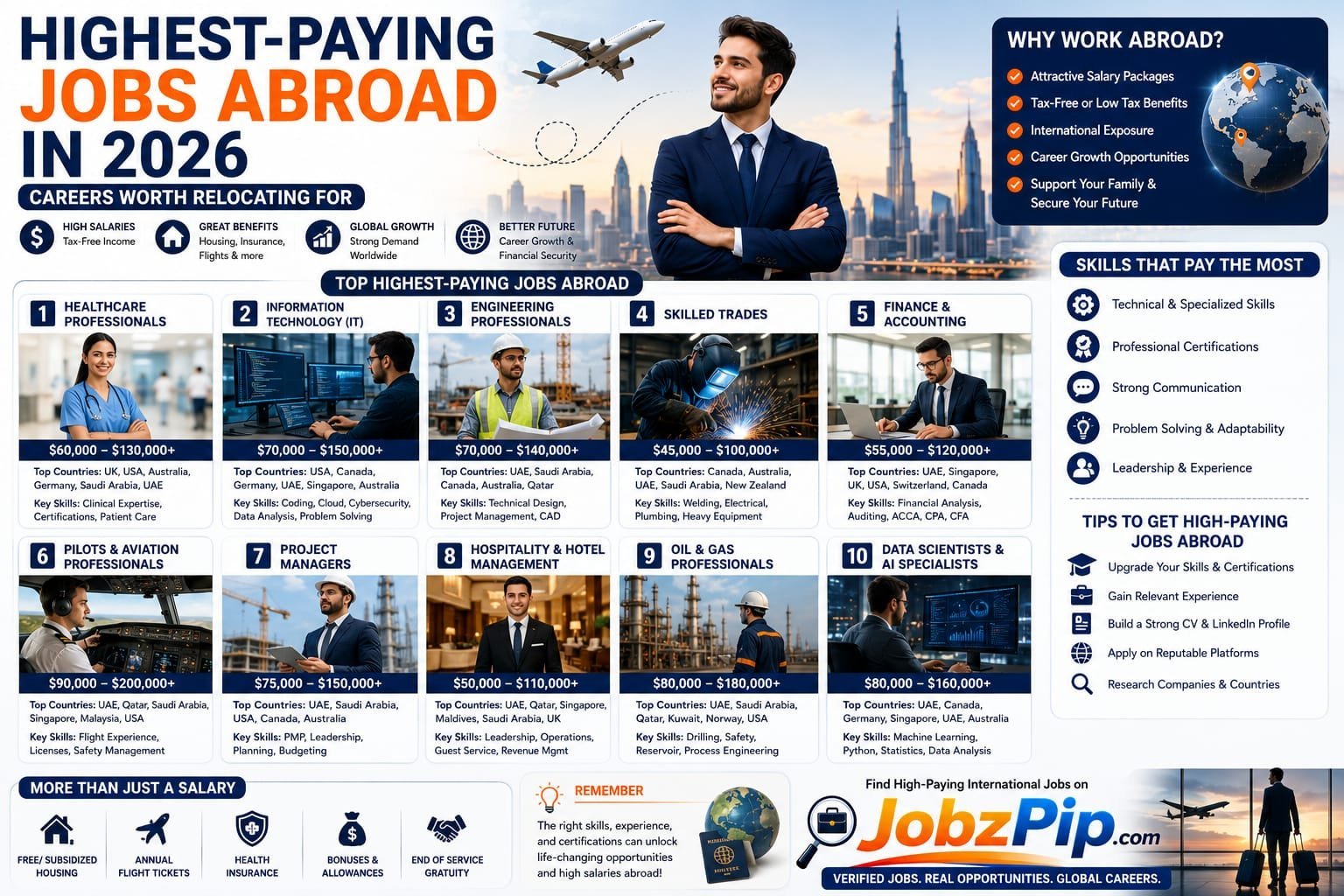
Picking a destination isn’t just about salary. Consider the total package: cost of living, ability to send money home, contract protections, cultural fit, language requirements, and long-term prospects like permanent residency options. Gulf countries generally offer higher immediate take-home pay due to zero income tax, but limited long-term settlement options. Countries like Canada, Australia, and Germany offer lower initial salaries relative to cost of living but far stronger pathways to long-term residency and family settlement.
It’s also worth considering how quickly you need to start earning. Gulf countries and Malaysia typically have faster, more straightforward visa processing timelines, often a matter of weeks. Canada, Australia, and European points-based systems can take several months to over a year, but they reward patience with much greater long-term security.
Final Thoughts
The world of international recruitment is constantly shifting based on economic needs, government policy, and demographic trends. Staying informed about which countries are actively hiring, and in which sectors, gives you a real advantage over other applicants who are simply applying everywhere without a strategy.
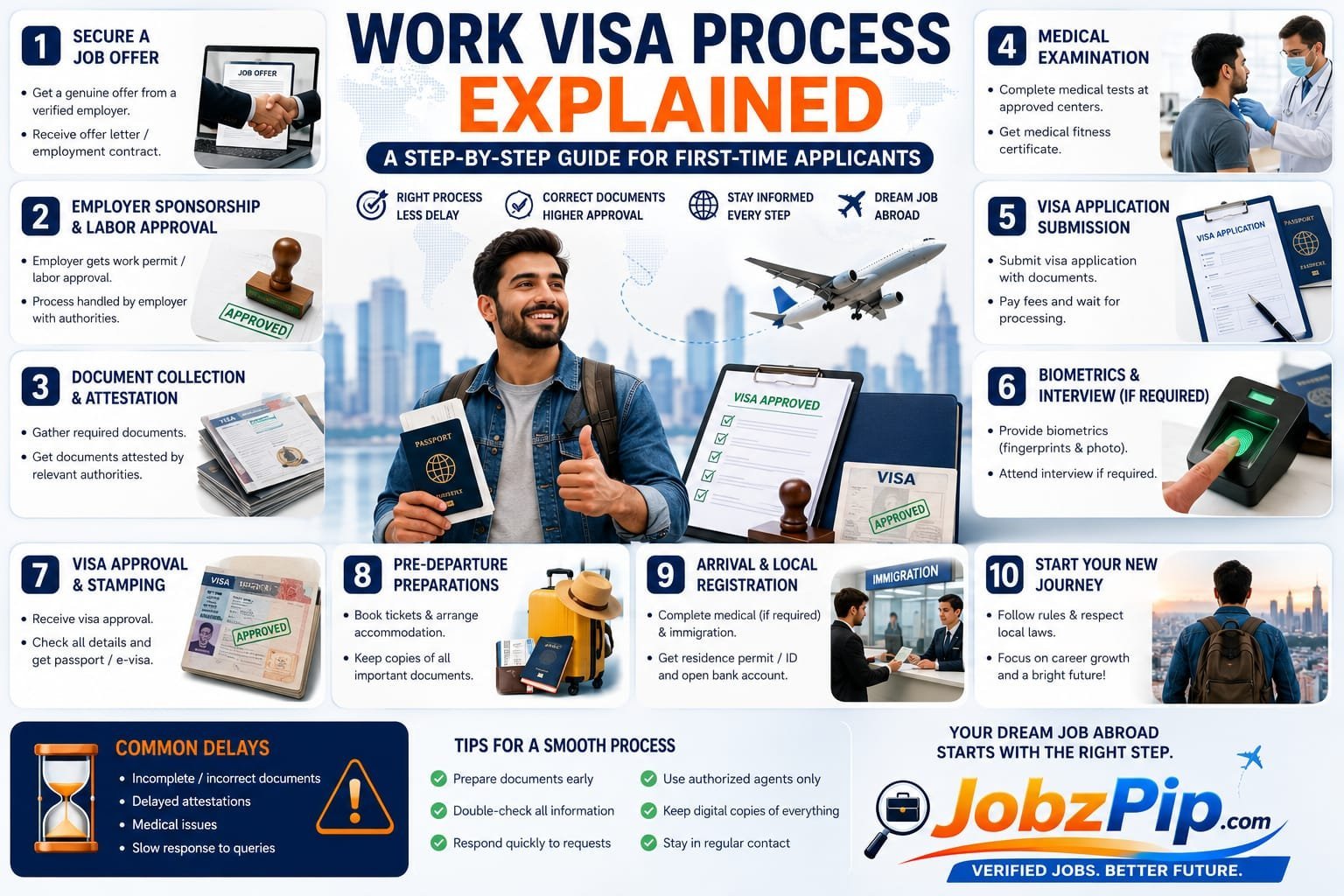
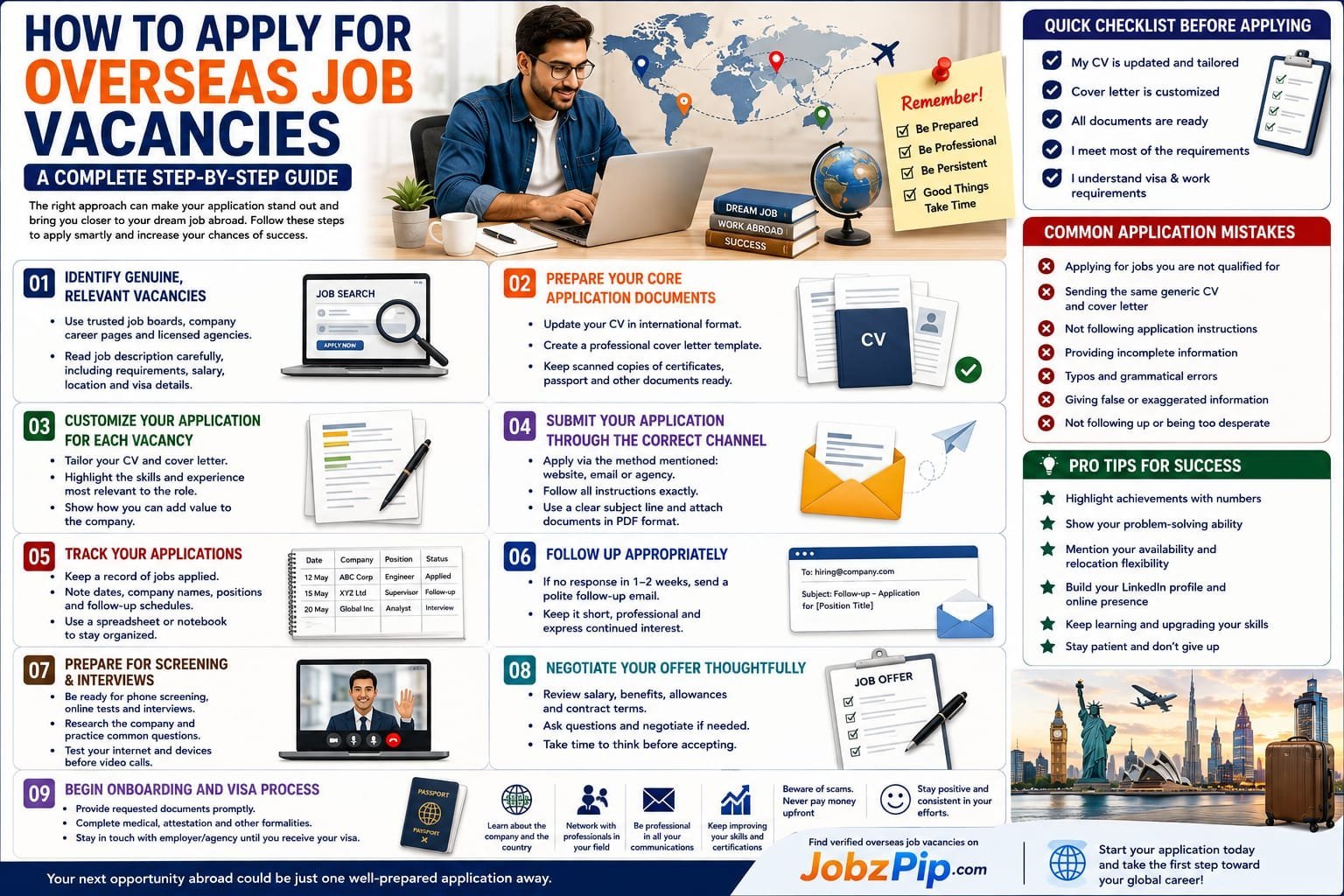
Whatever destination you choose, always verify job offers through official channels, research the specific visa category that applies to your situation, and prepare your documents well in advance. The opportunities are real and growing, but success comes from being informed, prepared, and patient throughout the process.
Check Jobzpip regularly for verified international vacancies across all these destinations, updated as new opportunities become available.






Leave a Reply