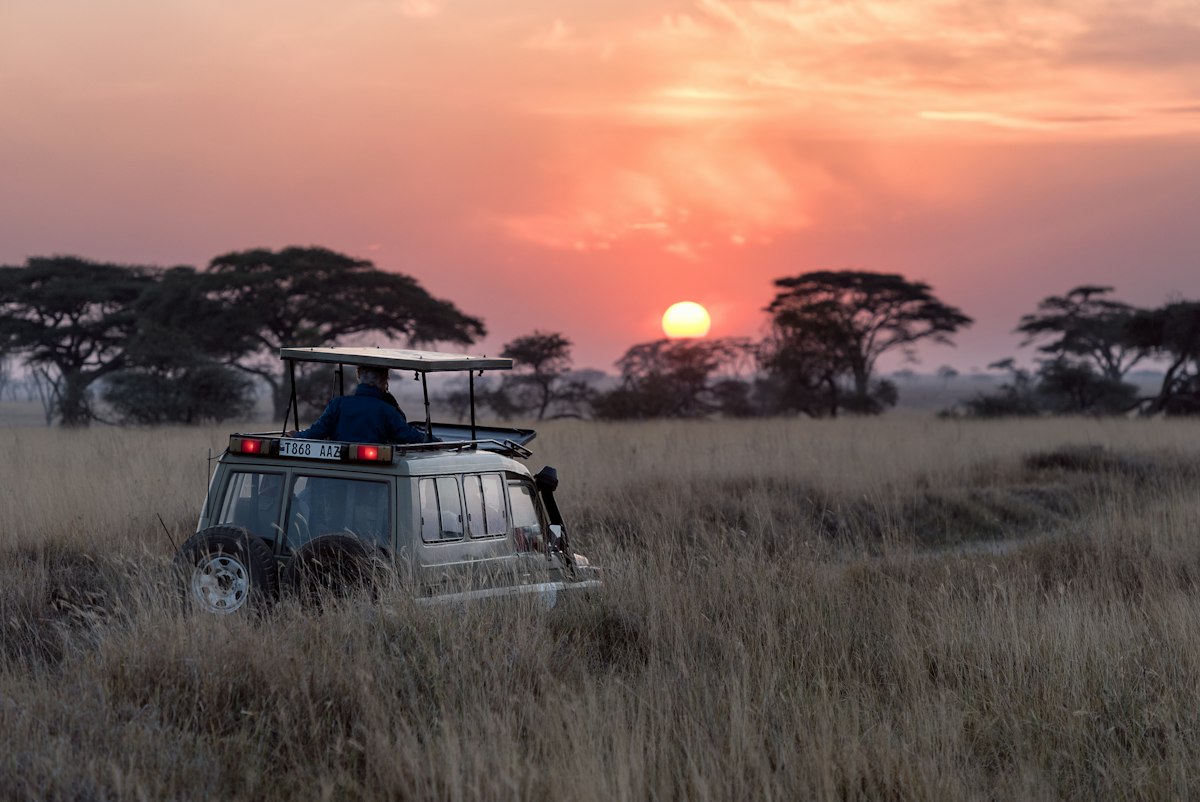
An African safari is often described as a life-changing experience, and that description rarely falls short of the reality. Witnessing the raw power of a lion hunt, the impossible grace of a giraffe moving through acacia trees at golden hour, or the thunderous spectacle of the Great Wildebeest Migration across the Serengeti are experiences that imprint themselves permanently on the imagination. In 2026, Africa’s top safari destinations are more accessible than ever, though advance planning remains essential for securing the best properties and experiences.
Tanzania: Serengeti and Ngorongoro
Tanzania is home to arguably the world’s greatest wildlife spectacle — the annual Great Migration. Between July and October, over 1.5 million wildebeest and hundreds of thousands of zebra migrate from the Serengeti plains of Tanzania into Kenya’s Masai Mara in search of fresh grass. The river crossings, where massive herds plunge into crocodile-filled waters, are among nature’s most dramatic moments.
The Ngorongoro Crater, a UNESCO World Heritage site, offers a unique safari experience in a self-contained ecosystem. The 600-meter-deep caldera houses an extraordinary concentration of wildlife including the densest population of lions in Africa and one of the last sanctuaries for black rhinoceros. A day trip into the crater is one of the most reliable wildlife viewing experiences in Africa.
Kenya: Masai Mara and Amboseli
The Masai Mara needs little introduction to wildlife enthusiasts. The northern extension of the Serengeti ecosystem receives the wildebeest migration between August and October and maintains exceptional year-round game viewing due to its well-watered grasslands. The Mara is also renowned for its large prides of lions and resident cheetah populations.
Amboseli National Park offers a different but equally compelling safari experience, with herds of elephants moving against the dramatic backdrop of Mount Kilimanjaro. The sight of a hundred elephants walking across the dusty plains with Africa’s highest peak rising behind them is one of the continent’s most photographed and iconic images.
Botswana: The Okavango Delta
Botswana’s Okavango Delta is one of Africa’s great wonders — an inland delta where the Okavango River fans out across the Kalahari Desert, creating a mosaic of channels, islands, and floodplains teeming with wildlife. The delta offers safari experiences unavailable elsewhere in Africa, including mokoro canoe excursions through papyrus channels and walking safaris with expert local guides.
Botswana has deliberately positioned itself as a high-value, low-volume safari destination. The government limits visitor numbers through high permit fees and expensive lodges, which means the wildlife experiences are genuinely exclusive and undisturbed. A Botswana safari is expensive by any standard, but the quality of encounters and the sense of wilderness are unmatched.
South Africa: Kruger and Beyond
South Africa offers the most accessible safari experience in Africa, particularly through the Kruger National Park and the surrounding private reserves. Self-drive safaris are possible in Kruger, allowing budget-conscious travelers to experience exceptional wildlife viewing without the costs associated with guided safaris in other destinations. The Sabi Sand Game Reserve adjacent to Kruger is one of the best places in Africa to see leopard, which are notoriously elusive elsewhere.
South Africa also offers the unique proposition of combining a safari with other world-class travel experiences. Cape Town, the Cape Winelands, and the Garden Route are all within easy reach, making South Africa ideal for travelers who want wildlife alongside beaches, food culture, and vineyards.
Planning Your Safari: Key Considerations
The best time to visit varies by destination. Tanzania and Kenya’s migration season runs July to October. Botswana’s best wildlife viewing is during the dry season from April to October. South Africa’s Kruger is excellent year-round but particularly productive in the dry winter months from May to September.
Budget is the other critical planning factor. A high-end Tanzania safari staying in luxury tented camps can cost $1,000 per person per night. A self-drive South Africa Kruger safari can be done for under $200 per person per day. The experiences at both ends of the spectrum are remarkable, just different. Whatever your budget, a safari should be on every traveler’s bucket list.
About the Author