Last Updated: [Insert Date]
Welcome to Jobzpip (“we,” “us,” “our,” or “the Site”), accessible at jobzpip.com. By accessing or using our website, you agree to be bound by the following Terms and Conditions. Please read them carefully before using our services. If you do not agree with any part of these terms, please discontinue use of the website.
1. Use of Our Website
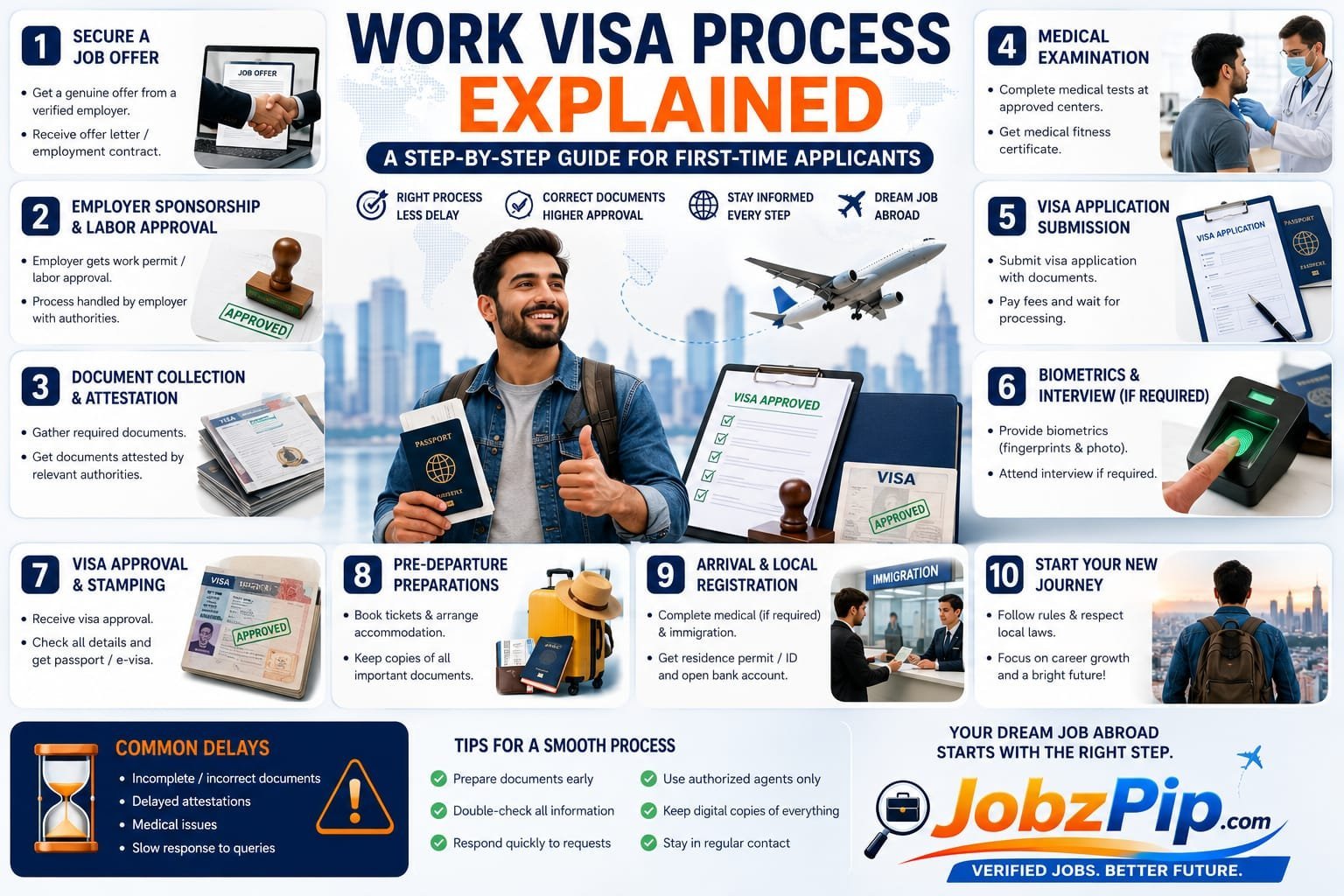
Jobzpip provides information related to international job opportunities, career guidance, and related resources. You agree to use this website only for lawful purposes and in a manner that does not infringe upon the rights of, restrict, or inhibit anyone else’s use of the site.
You must be at least 18 years old to use this website or submit any personal information through it.
2. Nature of Our Content
The job listings, guides, and articles published on Jobzpip are intended for general informational purposes only. While we strive to ensure the information we provide is accurate, up to date, and sourced from reliable channels, we do not guarantee the accuracy, completeness, or timeliness of any content on this website.
Jobzpip is not a recruitment agency, employer, or immigration consultancy, unless explicitly stated otherwise for a specific service. We do not guarantee employment, visa approval, or any specific outcome as a result of using information found on this website.
3. Job Listings and Third-Party Employers
Job vacancies displayed on Jobzpip may be sourced from employers, recruitment agencies, or publicly available listings. While we make reasonable efforts to feature legitimate opportunities, we cannot independently verify every detail of every listing, and we are not responsible for the hiring practices, contract terms, or conduct of any third-party employer or agency featured on our platform.
Users are strongly encouraged to independently verify any job offer, employer, or recruitment agency before making any payments, sharing sensitive personal documents, or making travel arrangements. Jobzpip is not liable for any loss, damage, or harm resulting from your interactions with third-party employers or recruiters found through our website.
4. No Guarantee of Employment or Visa Outcomes
Nothing on this website constitutes a guarantee of employment, visa issuance, or successful relocation. Immigration and employment outcomes depend on numerous factors outside our control, including the policies of foreign governments, the decisions of individual employers, and the personal circumstances of each applicant.
5. User Conduct
When using Jobzpip, you agree not to:
- Submit false, misleading, or fraudulent information
- Use the website for any unlawful purpose, including scams or fraudulent recruitment activity
- Attempt to gain unauthorized access to any part of the website or its underlying systems
- Copy, reproduce, or redistribute our content without prior written permission
- Post or transmit any harmful, defamatory, or offensive material through any contact forms or comment sections
6. Intellectual Property
All content published on Jobzpip, including articles, guides, graphics, logos, and website design, is the property of Jobzpip unless otherwise credited, and is protected by applicable copyright and intellectual property laws. You may not reproduce, distribute, or use our content for commercial purposes without our prior written consent.
7. External Links
Our website may contain links to third-party websites, including employer career pages, government portals, and other external resources. These links are provided for convenience only. We do not endorse and are not responsible for the content, accuracy, or practices of any linked third-party website.
8. Limitation of Liability
To the fullest extent permitted by law, Jobzpip and its owners, employees, and affiliates shall not be liable for any direct, indirect, incidental, consequential, or special damages arising out of or in connection with your use of this website, including but not limited to financial loss, loss of opportunity, or damages resulting from reliance on information provided on the site.
9. Changes to Job Listings and Content
We reserve the right to add, modify, or remove any job listing, article, or other content on our website at any time, without prior notice, particularly if a listing is found to be outdated, inaccurate, or fraudulent.
10. Advertising and Third-Party Services
Jobzpip may display advertisements from third-party networks. We are not responsible for the content of these advertisements or any products and services they promote. Any transactions or interactions with advertisers are solely between you and the advertiser.
11. Modifications to These Terms
We reserve the right to update or modify these Terms and Conditions at any time. Changes will be posted on this page with an updated “Last Updated” date. Continued use of the website after changes are posted constitutes your acceptance of the revised terms.
12. Governing Law
These Terms and Conditions shall be governed by and construed in accordance with the laws of [Insert Your Country/Jurisdiction], without regard to its conflict of law principles.
13. Contact Us
If you have any questions about these Terms and Conditions, please contact us at:
Email: [your-email@jobzpip.com]
Address: [your business address, if applicable]
Disclaimer: This Terms and Conditions template is provided for general informational purposes and does not constitute legal advice. We recommend consulting a legal professional to ensure this document fully complies with the laws applicable to your business and target audience.